


NEURODEVELOPMENTAL DISORDER
Neurodevelopmental disorders are mental conditions that affect how the nervous system (brain and spinal cord) develops. According to DSM-5, they usually begin in early childhood, often before school age, and can continue throughout life. These disorders impact functioning in areas such as personal, social, academic, or occupational life, and symptoms vary in severity across individuals.
Common neurodevelopmental disorders include autism spectrum disorder, ADHD, intellectual disabilities, communication and learning disorders, cerebral palsy, and motor disorders. They can affect memory, language, behaviour, emotions, learning, and motor skills. Although lifelong, individuals can manage challenges with appropriate interventions, support, and accommodations.
Overall, neurodevelopmental (or neurobehavioral) disorders are lifelong conditions that arise during development and involve difficulties in cognitive, motor, social, communication, or behavioural functioning.
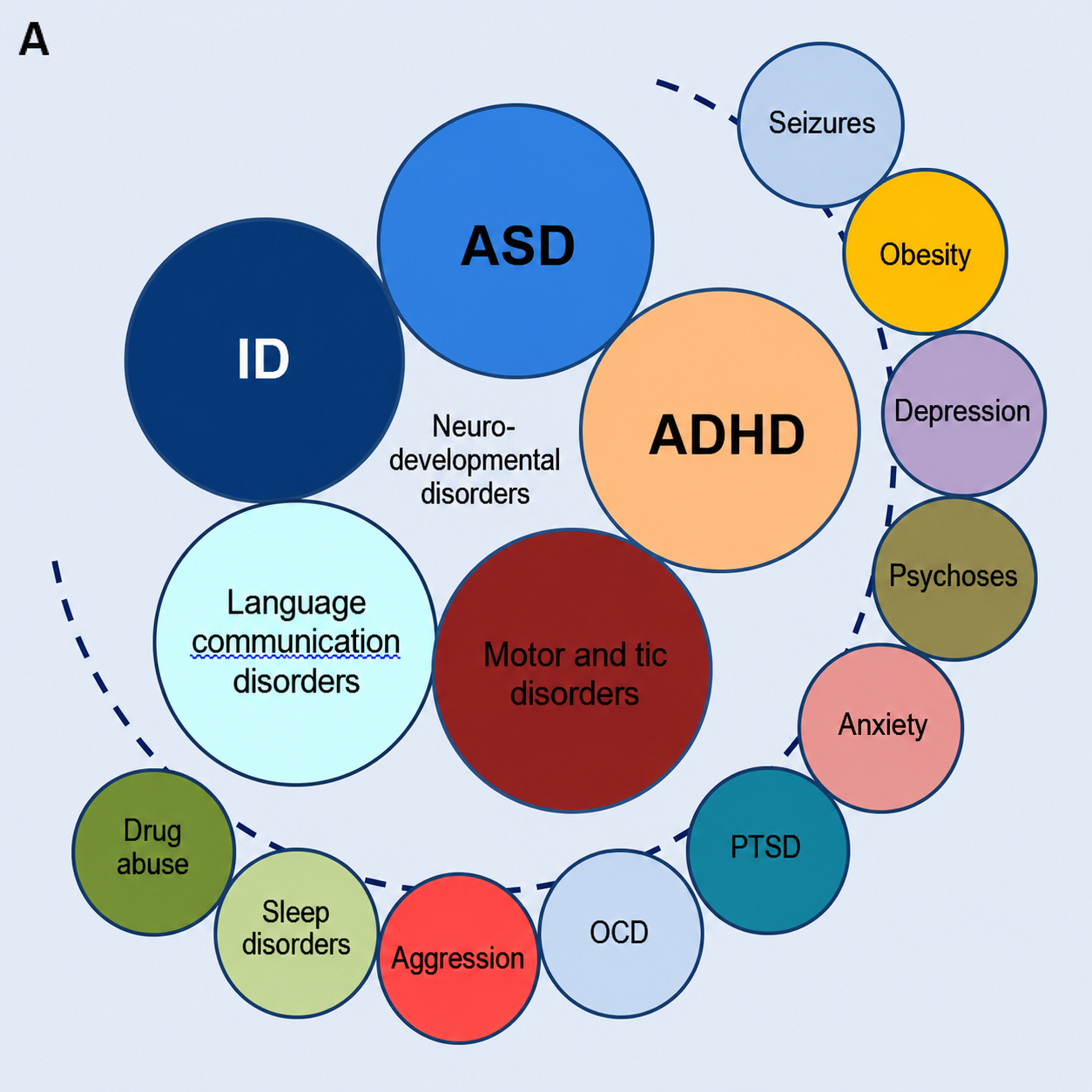
- https://en.wikipedia.org/wiki/Neurodevelopmental_disorder
- https://en.wikipedia.org/wiki/Neurodevelopmental_disorder
- https://en.wikipedia.org/wiki/Neurodevelopmental_disorder
1.1 Intellectual Disabilities
Intellectual disability is a neurodevelopmental condition that begins during the developmental period (before age 18–22) and affects two main areas: intellectual functioning and adaptive functioning.
Key features
- Intellectual functioning: Difficulties in learning, reasoning, judgment, and problem-solving. It is commonly measured using IQ tests, where an IQ below about 70–75 is a key diagnostic indicator.
- Adaptive functioning: Challenges in everyday life skills required to live independently and interact socially.
Areas of adaptive functioning
- Conceptual skills: Language, reading, writing, math, memory, and reasoning.
- Social skills: Communication, empathy, social judgment, following rules, and forming relationships.
- Practical skills: Self-care, managing money, job responsibilities, organisation, and daily living tasks.
Epidemiology
- Intellectual disability (ID) is relatively uncommon but widespread, affecting 1–3% of children and the global population (around 200 million people).
- It is slightly more common in males than females and often peaks between ages 10–14.
- Low-income countries have higher rates, with about 16.41 per 1,000 people affected, and 80% of people with disabilities live in these countries.
- People with disabilities make up one in five of the world’s poorest people.
- In developing countries, prevalence among children is estimated at 10–15 per 1,000, and about 85% of cases are mild.
- Accurate incidence is difficult to measure because mild intellectual disability may be recognized later in childhood.
Symptoms
Intellectual disability affects intellectual functioning and adaptive behaviour.
1) Intelligence-related difficulties
- Delayed learning and slower reading.
- Problems with reasoning, judgment, planning and problem-solving.
- Difficulty with focus and attention.
2) Adaptive behaviour difficulties
- Delayed self-care skills (toilet training, dressing, bathing).
- Slower social development and difficulty understanding social boundaries.
- Trouble with chores, money, time management and daily responsibilities.
- Need for help with daily living and healthcare tasks.
- Difficulty forming and understanding relationships.
3) Signs in children
- Delayed milestones (walking, talking, self-care).
- Trouble remembering, problem-solving and linking actions to consequences.
- Behaviour issues such as tantrums.
- Severe cases may include seizures, motor, vision or hearing problems.
Causes
Intellectual disability can occur before birth, during birth, or in early childhood. Often, the exact cause is unknown.
1) Genetic causes
- Chromosomal or gene abnormalities (e.g., Down syndrome, Fragile X syndrome, PKU).
- Genetic mutations or inherited conditions.
2) Prenatal (before birth) causes
- Infections during pregnancy (rubella, toxoplasmosis).
- Exposure to alcohol, drugs, toxins or radiation.
- Maternal medical conditions (e.g., hypothyroidism).
- Brain malformations or developmental problems.
3) Birth-related causes
- Lack of oxygen (hypoxia).
- Premature birth or birth injuries.
4) Early childhood causes
- Brain injuries or accidents.
- Infections (meningitis, measles, whooping cough).
- Exposure to toxins (lead, mercury).
- Tumours, epilepsy or severe malnutrition.
Key facts
- Causes are broadly divided into genetic abnormalities and environmental exposures.
- Fetal alcohol syndrome is the most common preventable cause.
- Down syndrome is the most common chromosomal cause.
- Fragile X syndrome is the most common inherited genetic cause.
Diagnosis of Intellectual Disability
Intellectual disability (ID) is diagnosed through a combination of developmental assessments, intelligence testing, adaptive behaviour evaluation, medical tests, and professional observation.
Severity levels
Experts classify ID into four categories based on mental age and level of independence:
- Mild (≈85% of cases):
Mental age 9–12 years. Individuals may struggle with complex learning but can often live and work independently with early support.
- Moderate:
Mental age 6–9 years. Individuals use simple language, achieve elementary-level education, and can live semi-independently with support. - Severe:
Mental age 3–6 years. Communication is limited to words/phrases/gestures; daily support is needed. - Profound:
Mental age below 3 years. Mostly nonverbal; require continuous medical care and full-time support.
Tests used in diagnosis
Diagnosis involves assessing both intellectual functioning (IQ) and adaptive behaviour. Additional tests help identify underlying causes:
- Lab tests (blood, urine) to detect medical or metabolic causes
- Genetic counselling to identify inherited conditions
- Imaging tests (brain scans) to detect structural differences
- EEG when seizures are suspected
How is a diagnosis made in children
Diagnosis may begin if a child shows developmental delays or physical signs of genetic/metabolic disorders. Doctors first rule out other causes (e.g., hearing or neurological issues).
A formal diagnosis requires three key components:
- Parent interviews
- Observation of the child
- Testing of IQ and adaptive behaviour
Both IQ deficits and adaptive functioning deficits must be present for diagnosis.
After diagnosis
A multidisciplinary team evaluates the child’s strengths and weaknesses to determine the level and type of support needed at home, school, and in the community.
Management & Treatment
Treatment approach
Intellectual disability cannot be cured, but supportive interventions help individuals build skills and achieve a good quality of life. Treatment focuses on improving adaptive behaviour, independence, and daily living skills.
Main treatment and support options
- Educational support:
Customized learning plans such as an Individualized Education Plan (IEP) help adjust teaching methods and expectations.
- Behavioral interventions:
Help individuals learn adaptive behaviours, communication, and life skills.
- Vocational training:
Teaches job and workplace skills to support independence and employment.
- Family education:
Guides families on understanding the condition and supporting the individual effectively.
- Medications:
Used to manage related conditions or symptoms (not the disability itself). - Community support services:
Government and support organizations provide home, work, and daytime activity support.
Services by age group
Early childhood (babies & toddlers):
- Early intervention programs create an Individualized Family Service Plan (IFSP).
- Services may include:
- Speech therapy
- Occupational therapy
- Physical therapy
- Family counselling
- Assistive devices training
- Nutrition support
School-age children:
- Eligible for free special education services through public schools.
- Parents and educators create an IEP outlining supports and accommodations.
- Goal: adapt teaching and the classroom environment so the child can succeed academically and socially.
Overall:
Support begins early and continues across life stages, focusing on education, independence, employment, and community participation.
Outlook/Prognosis
What to expect as a parent
Children with intellectual disability may notice differences between themselves and others, but often cannot fully understand their condition. Parents and caregivers usually recognize the signs first and play a key role in support and guidance.
- Children with intellectual disability still have strengths, goals and aspirations, and need encouragement to develop them.
- They may be more vulnerable to exploitation or harm, so caregiver supervision and protective skills training are important.
Outlook and future
The long-term outlook varies based on:
- Severity of the disability
- Underlying causes
- Presence of additional conditions
Most individuals will need lifelong support, but many can:
- Live independently to some degree
- Work and build careers
- Form relationships and families
- Participate in everyday community life
Overall: With the right support, services, and opportunities, people with intellectual disability can achieve a good quality of life.
Prevention of Intellectual Disability
Intellectual disability often has no single known cause, and parents should not blame themselves. However, some risks can be reduced before and during pregnancy and early childhood.
Ways to lower risk
- Follow medical advice during pregnancy, including recommended medications and vaccinations.
- Avoid alcohol, tobacco, non-prescription drugs, and environmental toxins (e.g., lead).
- Seek genetic counselling before conception if there is a family history of related conditions.
Preventable causes and prenatal care
- A major preventable cause is fetal alcohol syndrome, so alcohol should be avoided during pregnancy.
- Proper prenatal care, prenatal vitamins, and vaccinations against infections help reduce risk.
- Genetic testing may be recommended for families with hereditary disorders.
Prenatal testing
Tests such as ultrasound and amniocentesis can detect conditions linked to intellectual disability before birth. These tests help with early identification and planning but cannot correct the condition.
Overall: While not all cases can be prevented, healthy pregnancy practices, genetic counselling, and prenatal care can reduce the risk.
Caring for a Child with Intellectual Disability
Children with intellectual disabilities often need lifelong support in decision-making, healthcare, and daily life. Early monitoring and strong caregiver involvement are essential.
When to see a healthcare provider
- Developmental delays may be noticed during routine pediatric “ages and stages” checkups.
- Delays can have many causes, so parents should consult a paediatrician if concerned.
- Early guidance helps parents understand next steps and available support.
Helpful questions to ask the doctor
Parents can better support their child by asking about:
- Severity of the disability
- Child’s strengths and challenges
- Available support programs and school services
- Possibility of independent living and needed services
- Presence of other treatable conditions
How parents can support their child
- Educate yourself: Learn about intellectual disability to advocate effectively.
- Promote independence: Encourage trying new tasks and praise achievements.
- Encourage social participation: Group activities help build social skills.
- Stay involved in education: Work closely with teachers and reinforce learning at home.
- Seek peer support: Connect with other parents for advice and emotional support.
Overall: Active parental involvement, early medical guidance, education, and community support help children with intellectual disability grow, learn, and develop independence.
A note from DACC INDIA
Neurodevelopmental disorders, including intellectual disability, begin early in life and affect cognitive, social, behavioural, and adaptive functioning. Although lifelong and varying in severity, early diagnosis, intervention, education support, and family involvement greatly improve outcomes. With appropriate medical care, therapies, and community support, many individuals can develop independence, work, form relationships, and participate meaningfully in society. Prevention through healthy prenatal care and awareness can reduce risks, while ongoing support ensures individuals achieve a good quality of life and reach their full potential.
- https://www.psychiatry.org/patients-families/intellectual-disability/what-is-intellectual-disability
- https://www.specialolympics.org/about/intellectual-disabilities/what-is-intellectual-disability
- https://www.webmd.com/parenting/baby/child-intellectual-disability
- https://pmc.ncbi.nlm.nih.gov/articles/PMC6297696/
- https://my.clevelandclinic.org/health/diseases/25015-intellectual-disability-id
- https://www.ncbi.nlm.nih.gov/books/NBK547654/