Attention – Deficit Hyperactivity Disorder
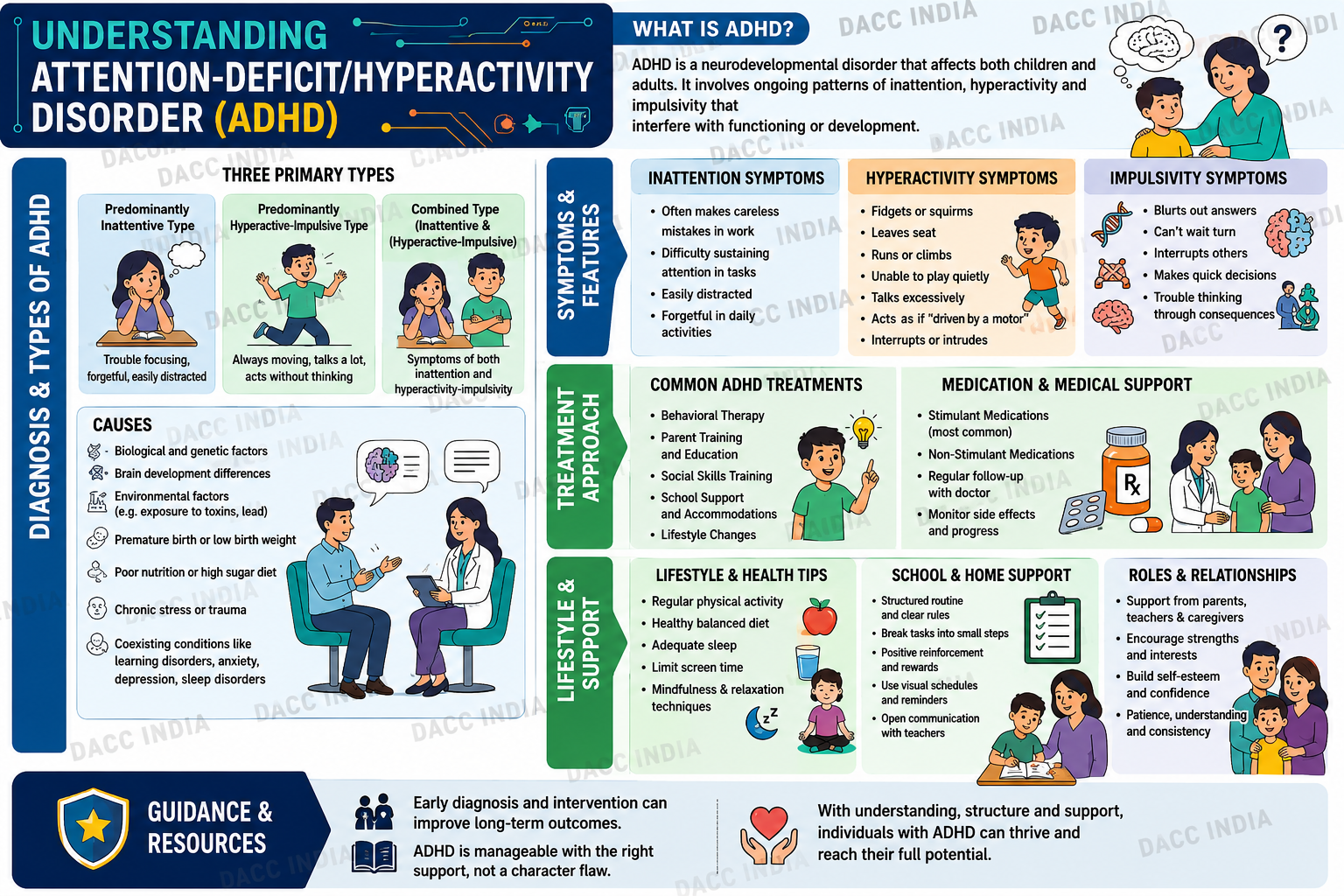
Attention-Deficit/Hyperactivity Disorder (ADHD) is a common neurodevelopmental disorder that affects children and often continues into adulthood. It impacts attention, behavior, learning, relationships, and daily functioning. The main symptoms of ADHD include inattention, hyperactivity, and impulsivity. Individuals may struggle with focusing, staying organised, sitting still, waiting their turn, or controlling impulsive actions. Symptoms occur across multiple settings such as home, school, work, and social environments.
ADHD is commonly diagnosed during childhood, especially when academic or behavioral difficulties become noticeable. Boys are more often diagnosed than girls, although girls may show less obvious inattentive symptoms such as daydreaming or forgetfulness. ADHD can affect self-esteem, academic performance, emotional well-being, and interpersonal relationships.
There are three primary types of ADHD: predominantly inattentive presentation, predominantly hyperactive-impulsive presentation, and combined presentation. Diagnosis is based on behavioral evaluation, as there is no single medical test for ADHD. Although there is no cure, treatment options such as medication, behavioral therapy, education, and family support can help individuals manage symptoms effectively and improve daily functioning.
Symptoms and Causes
- Inattention Symptoms
- Inattention Symptoms
- Difficulty focusing and paying attention
- Trouble organizing tasks and activities
- Forgetting daily activities or losing things
- Difficulty following instructions
- Easily distracted during tasks or conversations
- Problems completing schoolwork or assignments
- Hyperactive-Impulsive Symptoms
- Excessive talking or interrupting others
- Restlessness, fidgeting, or inability to sit still
- Difficulty waiting for turns
- Acting without thinking about consequences
- Running or climbing in inappropriate situations
- Trouble remaining calm or quiet
- Types of ADHD
- Predominantly Inattentive Presentation – mainly attention and focus difficulties
- Predominantly Hyperactive-Impulsive Presentation – mainly hyperactivity and impulsive behaviors
- Combined Presentation – symptoms of both inattentiveness and hyperactivity-impulsivity
- Causes and Risk Factors
- Exact cause is not fully known
- Genetic, neurological, and environmental factors may contribute
- Risk factors include premature birth, low birth weight, brain injury, and toxin exposure during pregnancy
Diagnosis and Tests
The content explains how ADHD is diagnosed in both children and adults. Key points include:
- ADHD is diagnosed by mental health professionals or primary care providers using symptom criteria from the DSM-5-TR.
- There is no blood test, urine test, or brain scan that can diagnose ADHD.
- Diagnosis involves:
- Reviewing symptoms and behavior
- Gathering information from parents, teachers, caregivers, or others
- Looking at medical, family, educational, and developmental history
- Ruling out other conditions that may cause similar symptoms
- To diagnose ADHD in children:
- Symptoms must begin before age 12
- Symptoms must appear in at least two settings (such as home and school)
- Symptoms must interfere with daily life and relationships
- A child must show at least six symptoms of inattention and/or hyperactivity-impulsivity
- The text also notes that ADHD often occurs alongside other conditions, such as:
- Anxiet
- Depression
- Oppositional defiant disorder
- Autism
- Learning disabilities
- For adults:
- ADHD can continue into adulthood
- Some adults are diagnosed later in life
- Symptoms may affect work, home life, and relationships
- Hyperactivity in adults may appear as restlessness rather than obvious overactivity
Management & Treatment
- The content explains ADHD treatment and management strategies for children and adults. Main points include:
- ADHD treatment usually combines:
- Behavioral therapy
- Parent training
- Medication
- Lifestyle changes
- Behavioral therapy is often the first recommended treatment for young children.
- Parent-Child Interaction Therapy (PCIT) can help improve behavior and parent-child relationships.
- Medications include:
- Stimulants such as amphetamines and methylphenidate
- Non-stimulants such as atomoxetine and viloxazine
- Treatment plans vary depending on age, symptoms, and individual needs.
Parents and caregivers can help by:
- Creating routines and organized environments
- Using calendars and schedules
- Giving clear instructions
- Rewarding positive behavior
- Setting timers and structured homework times
- Praising effort and completed tasks
Social skills groups and accommodations at school may also help children with ADHD.
- ADHD is recognized as a developmental disability under the Americans with Disabilities Act (ADA).
- Children may qualify for special education services or classroom accommodations.
Managing ADHD symptoms may also involve:
- Regular physical activity
- Healthy eating habits
- Limiting screen time
- Getting enough sleep
- Managing stress and anxiety
Adults with ADHD may benefit from:
- Workplace or school accommodations
- Quiet workspaces
- Written instructions
- Help organizing tasks and schedules
- Support from family, friends, or specialists
Overall, the content emphasizes that ADHD can often be effectively managed with the right combination of therapy, medication, structure, and healthy habits.
Outlook/Prognosis
ADHD doesn’t go away but doesn’t have to be an impairing condition. You can’t outgrow it, but treatment can help manage your symptoms. Thanks to effective treatments, some people don’t show impairment from ADHD symptoms once they’ve reached adulthood. But for others, symptoms still affect their daily life. Providers tailor care to each individual’s needs.
Adults with ADHD may benefit from:
- Workplace or school accommodations
- Quiet workspaces
- Written instructions
- Help organizing tasks and schedules
- Support from family, friends, or specialists
Overall, the content emphasizes that ADHD can often be effectively managed with the right combination of therapy, medication, structure, and healthy habits.
A note from DACC India
Attention-Deficit/Hyperactivity Disorder (ADHD) is a common neurodevelopmental disorder that affects attention, behavior, learning, and daily functioning in children and adults. Common symptoms include inattention, hyperactivity, and impulsivity, which can impact school, work, and relationships. ADHD is diagnosed through behavioral evaluation, as no single medical test exists. Although ADHD has no cure, treatments such as medication, behavioral therapy, lifestyle changes, and family support can effectively manage symptoms. With proper care and support, many individuals with ADHD can improve their focus, organization, and overall quality of life.
Refrence links
- https://www.psychiatry.org/patients-families/adhd/what-is-adhd
- https://www.nimh.nih.gov/health/topics/attention-deficit-hyperactivity-disorder-adhd
- https://www.mayoclinic.org/diseases-conditions/adhd/symptoms-causes/syc-20350889
- https://www.cdc.gov/adhd/about/index.html
- https://www.nhs.uk/conditions/adhd-adults/
- https://my.clevelandclinic.org/health/diseases/4784-attention-deficithyperactivity-disorder-adhd
Case Study
Rohan Sharma, a 12-year-old boy studying in the 7th grade, was referred for psychological evaluation due to academic and behavioral difficulties observed at school and home. His teachers reported that he had trouble concentrating in class, frequently interrupted lessons, forgot assignments, and struggled to stay seated. At home, his parents noticed impulsive behavior, disorganization, incomplete tasks, and emotional frustration. Despite having average intelligence and creativity, his academic performance declined because of poor attention and difficulty completing work on time.
Rohan had shown signs of hyperactivity and restlessness since early childhood. Information collected through interviews, behavior rating scales, classroom observations, and developmental history indicated symptoms of both inattention and hyperactivity occurring in multiple settings before the age of 12. Based on DSM-5-TR criteria, he was diagnosed with Attention-Deficit/Hyperactivity Disorder (ADHD), Combined Presentation.
A treatment plan involving behavioral therapy, parent training, school accommodations, and possible medication consultation was recommended. Healthy lifestyle changes, including regular exercise, proper sleep, and reduced screen time, were also encouraged. With consistent treatment and family support, Rohan is expected to improve his behavior, attention, academic performance, and social relationships.
Infographic