Tourette’s Disorder
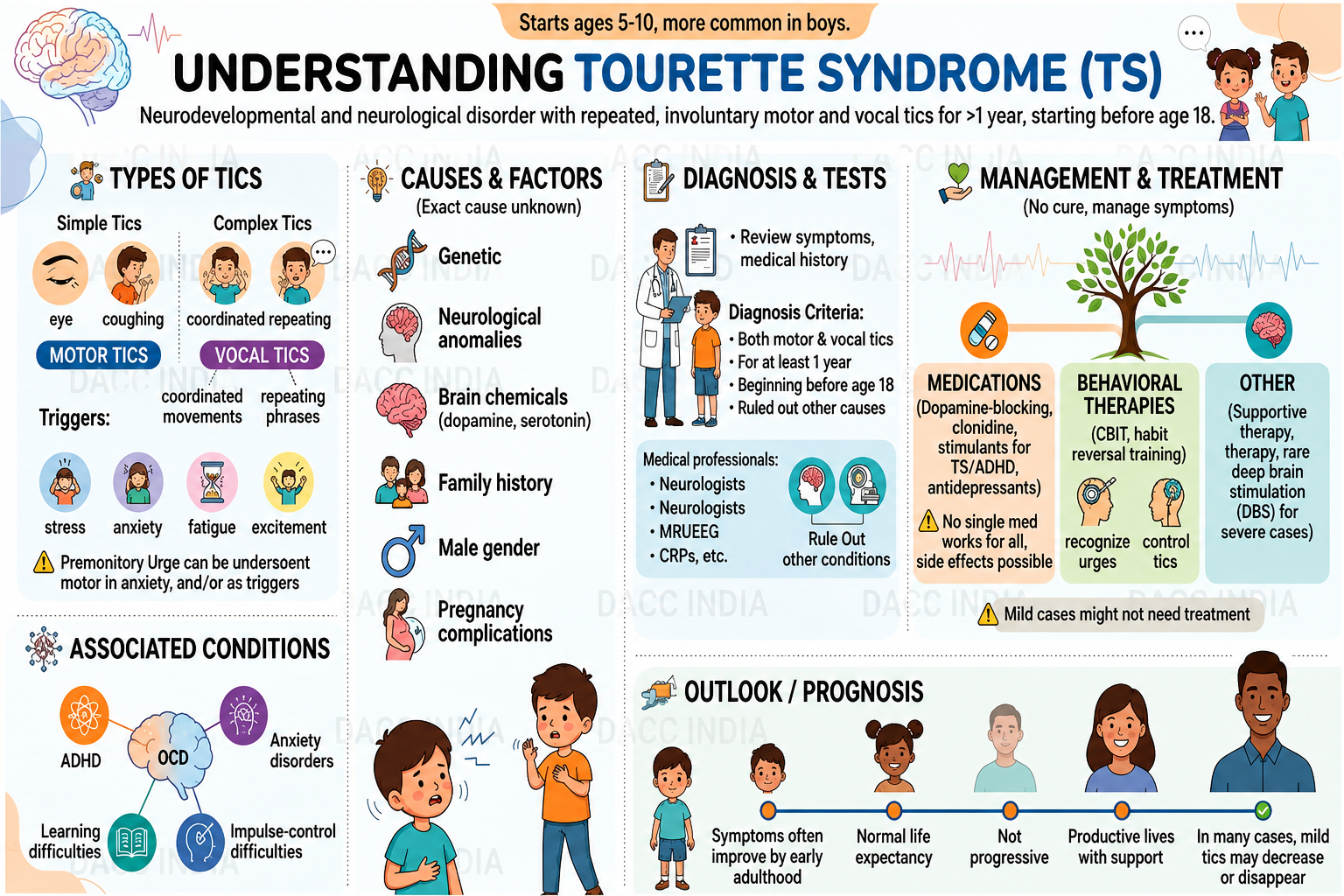
Tourette Syndrome (TS) is a neurodevelopmental and neurological disorder characterized by repeated, involuntary motor and vocal tics lasting for more than one year, beginning before the age of 18. Common motor tics include blinking, shoulder shrugging, facial movements, and head jerking, while vocal tics may involve coughing, throat clearing, sniffing, grunting, or repeating words. Symptoms often begin between ages 5 and 10 and are more common in boys.
Tics may increase during stress, anxiety, fatigue, or excitement and can vary in severity over time. Although the exact cause is unknown, genetic, neurological, and environmental factors are believed to contribute, particularly involving brain circuits and chemicals such as dopamine. Tourette Syndrome is often associated with conditions like ADHD, OCD, anxiety, and impulse-control difficulties. Diagnosis is based on the presence of both motor and vocal tics for at least one year after ruling out other medical causes.
There is no cure for Tourette Syndrome, but many individuals improve during adolescence or adulthood. Mild cases may not require treatment, while severe cases can be managed through behavioral therapies such as Comprehensive Behavioral Intervention for Tics (CBIT), emotional support, education, and medications when necessary. Most individuals with TS have a normal life expectancy and can lead productive lives with proper support and treatment.
Symptoms and Causes
- Tourette syndrome is a neurological disorder marked by sudden, repetitive, involuntary movements and sounds called tics.
- Tics can be:
⦁ Simple tics – involve a few muscles (eye blinking, shoulder shrugging, throat clearing, coughing).
⦁ Complex tics – involve coordinated movements or repeated words/phrases. - Symptoms usually begin between ages 5–10 and may peak during adolescence.
- Tourette syndrome includes:
⦁ Motor tics – physical movements.
⦁ Vocal tics – sounds or speech-related tics. - Tics may:
⦁ Change in frequency and severity over time.
⦁ Worsen with stress, anxiety, excitement, or tiredness.
⦁ Continue during sleep in some cases. - Many people feel a premonitory urge (itching, tension, or tingling) before a tic occurs.
- The exact cause is unknown but may involve:
⦁ Genetic factors.
⦁ Neurological abnormalities.
⦁ Environmental influences.
⦁ Imbalance of brain chemicals like dopamine and serotonin. - Risk factors include:
⦁ Family history of Tourette syndrome or tic disorders.
⦁ Male gender.
⦁ Pregnancy complications or low birth weight. - Symptoms often improve during late adolescence, but some continue into adulthood.
- Tourette syndrome may occur along with:
⦁ ADHD.
⦁ OCD.
⦁ Anxiety disorders.
⦁ Learning difficulties.
Diagnosis & Tests
- Tourette syndrome is diagnosed mainly by reviewing a person’s symptoms and medical history.
- There is no single blood test or scan that can confirm Tourette syndrome.
- Doctors diagnose it when:
⦁ Both motor and vocal tics are present.
⦁ Tics occur many times a day or intermittently for at least 1 year.
⦁ Symptoms begin before the age of 18.
⦁ Tics are not caused by medicines, substances, or another medical condition. - Doctors may ask about:
⦁ When the tics started.
⦁ How often the tics occur.
⦁ Family history of Tourette syndrome.
⦁ Other conditions such as ADHD or OCD. - Diagnosis is often done by:
⦁ Primary care doctors.
⦁ Pediatricians.
⦁ Mental health specialists.
⦁ Neurologists. - Additional tests like MRI, CT scan, EEG, or blood tests may be used to rule out other conditions.
- Some cases take time to diagnose because mild symptoms may be mistaken for habits, allergies, or developmental behaviors.
Management & Treatment
- There is currently no cure for Tourette syndrome, but treatments can help manage symptoms.
- Mild tics that do not affect daily life may not require treatment.
- Treatment is recommended when tics interfere with daily functioning, learning, or social life.
- Medications
- Dopamine-blocking medicines (such as haloperidol and pimozide) are commonly used to reduce tics.
- Alpha-adrenergic agonists like clonidine and guanfacine may also help control tics.
- Stimulant medications may help children with both Tourette syndrome and ADHD.
- Antidepressants can help manage anxiety, depression, and OCD symptoms linked with Tourette syndrome.
- No single medication works for everyone, and medicines may cause side effects.
- Behavioural and Psychological Therapies
- CBIT (Comprehensive Behavioral Intervention for Tics) and habit reversal training help people recognize urges and control tics.
- Supportive therapy and psychotherapy can help manage emotional, social, and behavioral difficulties.
- Therapy may also help with related conditions such as ADHD, OCD, anxiety, and depression.
- Other Treatments
- In severe cases, Deep Brain Stimulation (DBS) may be used to reduce tic frequency.
- Doctors carefully monitor treatment plans based on symptom severity and associated conditions.
- Diagnosis
- Doctors diagnose Tourette syndrome by reviewing symptoms and medical history.
- Diagnosis usually requires:
⦁ Both motor and vocal tics.
⦁ Symptoms lasting at least 1 year.
⦁ Onset before age 18. - Tests such as MRI, EEG, CT scans, or blood tests may be used to rule out other conditions.
Outlook/ Prognosis
- Tourette syndrome has no cure, but symptoms often improve by early adulthood.
- Many adults no longer need medication or therapy as they grow older.
- The condition is not progressive, meaning it does not worsen over time.
- People with Tourette syndrome generally have a normal life expectancy.
- In many cases, the disorder is mild and tics may decrease or disappear on their own.
A note from DACC India
Tourette syndrome is a neurological disorder characterized by involuntary motor and vocal tics that usually begin in childhood. Symptoms may range from mild to severe and can include blinking, throat clearing, repeated movements, or vocal sounds. Although there is no cure, treatments such as medications, behavioral therapy, and supportive counseling can help manage symptoms. The condition is not progressive, and many individuals experience improvement by early adulthood. People with Tourette syndrome generally have a normal life expectancy and can lead healthy, productive lives.
Refrence links
- https://courses.lumenlearning.com/wm-abnormalpsych/chapter/motor-disorders/
- https://www.mayoclinic.org/diseases-conditions/tourette-syndrome/symptoms-causes/syc-20350465
- https://www.ninds.nih.gov/health-information/disorders/tourette-syndrome
- https://www.cdc.gov/tourette-syndrome/about/index.html
- https://www.narayanahealth.org/blog/tourettes-syndrome-causes-symptoms-and-treatment
- https://www.nhs.uk/conditions/tourette-syndrome/
- https://emedicine.medscape.com/article/1182258-overview?form=fpf
- https://my.clevelandclinic.org/health/diseases/5554-tourette-syndrome
Case Study
Tourette Syndrome (TS) is a neurological disorder characterized by involuntary motor and vocal tics that usually begin during childhood. This case study focuses on Aarav Sharma, a 12-year-old boy studying in Grade 7, who was referred for psychological assessment due to repeated eye blinking, shoulder shrugging, throat clearing, and vocal sounds that had persisted for over two years. His symptoms became more severe during stress, anxiety, and examinations, affecting his classroom participation and social interactions. Aarav reported experiencing a strong urge before the tic occurred, followed by temporary relief afterward. Family history revealed mild tic symptoms in his uncle, suggesting a possible genetic influence. During assessment, Aarav appeared anxious and showed low self-confidence because of peer teasing and embarrassment. Clinical evaluation confirmed the diagnosis of Tourette Syndrome based on the presence of both motor and vocal tics lasting more than one year with onset before age 18. The treatment plan included Comprehensive Behavioral Intervention for Tics (CBIT), Habit Reversal Training (HRT), counseling, stress management, and psychoeducation for parents and teachers. With proper support and therapy, Aarav is expected to show gradual improvement in symptoms and overall functioning.
Infographic