Persistent (Chronic) Motor or Vocal Tic Disorder
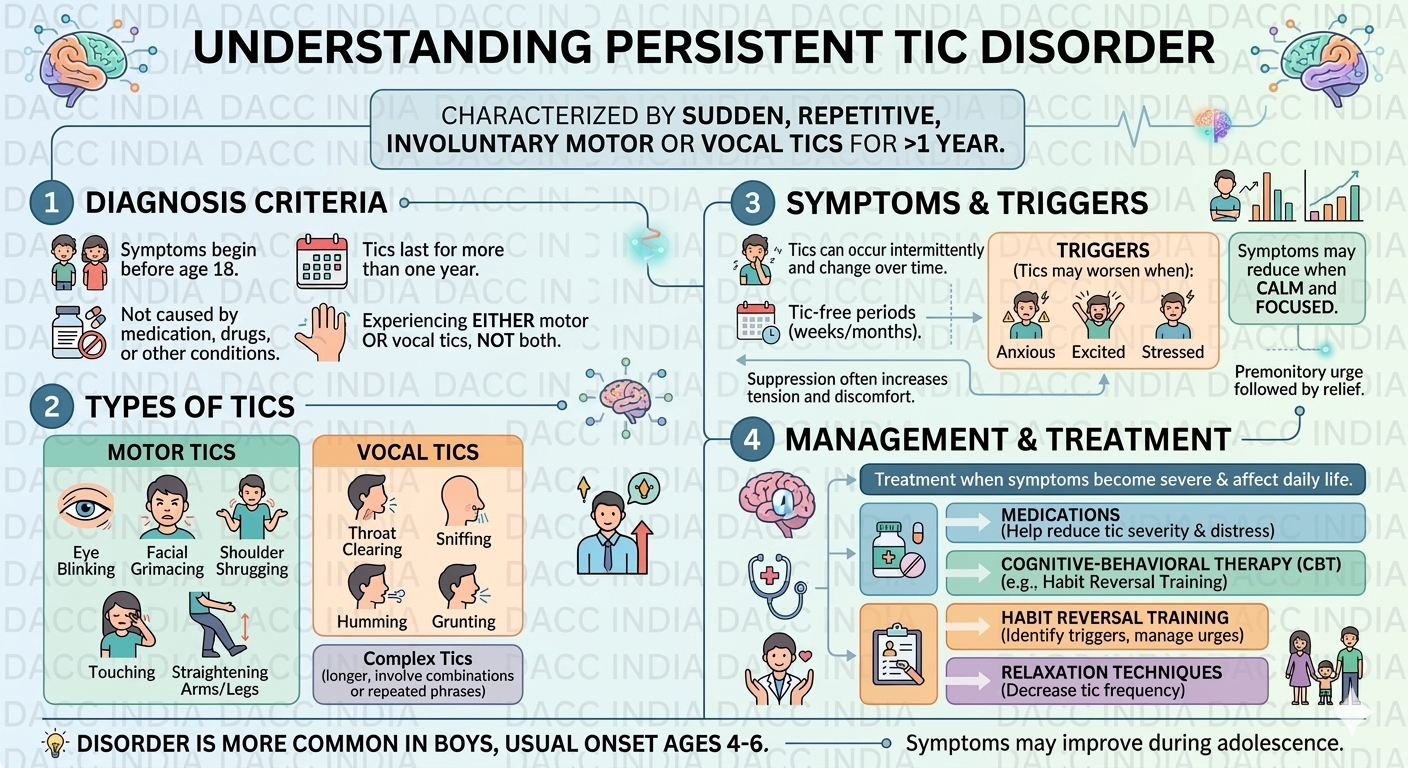
Persistent tic disorder is a condition characterized by sudden, repetitive, involuntary motor or vocal tics that continue for more than one year. Motor tics may include behaviors such as blinking or shoulder shrugging, while vocal tics may involve humming, throat clearing, or shouting words or phrases. To receive a diagnosis, symptoms must begin before the age of 18 and should not be caused by medication, drugs, or another medical condition. Unlike Tourette syndrome, individuals with persistent tic disorder experience either motor or vocal tics, but not both. The disorder is more common in boys and usually begins between the ages of 4 and 6, with symptoms often becoming most severe between ages 10 and 12. Many individuals experience a strong premonitory urge before the tic occurs, followed by a feeling of relief afterward. Symptoms may improve during adolescence.
Symptoms and Causes
- Tics can be simple or complex in nature.
- Simple motor tics are quick movements and may include:
⦁ Eye blinking
⦁ Facial grimacing
⦁ Rapid shoulder shrugging
⦁ Repetitive touching
⦁ Straightening of arms or legs - Simple vocal tics may include:
⦁ Throat clearing
⦁ Sniffing
⦁ Humming
⦁ Grunting - Complex tics last longer and may involve combinations of movements or repeated words/phrases.
- Tics often worsen when a person is anxious, excited, stressed, or exhausted.
- Symptoms may reduce when the person is calm and focused on activities.
- Tics can occur intermittently and may change over time.
- Tic-free periods can last for weeks or months.
- Mild or moderate tics may not cause significant distress or impairment.
- Children may temporarily suppress tics, but this often increases tension and discomfort.
- Relief is usually experienced after performing the tic again.
- Genetic factors play an important role in tic disorders and they may run in families.
- Environmental factors such as low birth weight and maternal smoking during pregnancy may increase risk.
- Stress and lack of sleep can worsen tic symptoms.
Management & Treatment
- Treatment for tic disorders is needed when symptoms become severe and affect school, social, or daily functioning.
- Medications and cognitive-behavioral therapy (CBT) can help reduce tic severity and related distress.
- Habit reversal training, a type of CBT, helps individuals identify triggers and manage urges associated with tics.
- Relaxation techniques may help decrease the frequency of tics.
Refrence links
A note from DACC India
Persistent Tic Disorder is a neurological condition characterised by repetitive, involuntary motor or vocal tics lasting for more than one year. Common motor tics include eye blinking and shoulder shrugging, while vocal tics may involve throat clearing or humming. Symptoms usually begin in childhood and may worsen with stress, anxiety, or fatigue. Genetic and environmental factors can contribute to the disorder. Although many individuals experience mild symptoms, severe cases may affect daily functioning. Treatment may include medication, cognitive-behavioural therapy, habit reversal training, and relaxation techniques to help manage symptoms effectively.
Case Study
This case study examines Leo, an 11-year-old male diagnosed with Persistent Motor Tic Disorder. Leo presented with repetitive, involuntary eye blinking and shoulder shrugging, symptoms that began at age five and have escalated in severity over the past 18 months. Consistent with the clinical criteria, Leo experiences premonitory urges—described as a “tight, itchy” sensation—followed by relief upon performing the tic. Notably, Leo exhibits only motor tics and no vocal symptoms, distinguishing his condition from Tourette syndrome.
Clinical assessment confirmed the diagnosis, noting the onset occurred well before age 18 and was unrelated to medical conditions or substance use. While initially mild, the tics have significantly impacted Leo’s social confidence and school participation, exacerbated by academic stress. Given the family history and current functional impairment, a treatment plan utilizing Habit Reversal Training (HRT) and relaxation techniques was implemented. By identifying premonitory urges and employing competing responses, Leo can better manage these behaviors. The long-term prognosis is positive, as symptoms typically improve during late adolescence, and current interventions are designed to alleviate his immediate social distress and improve overall functioning.
Infographic