Stereotypic Movement Disorder
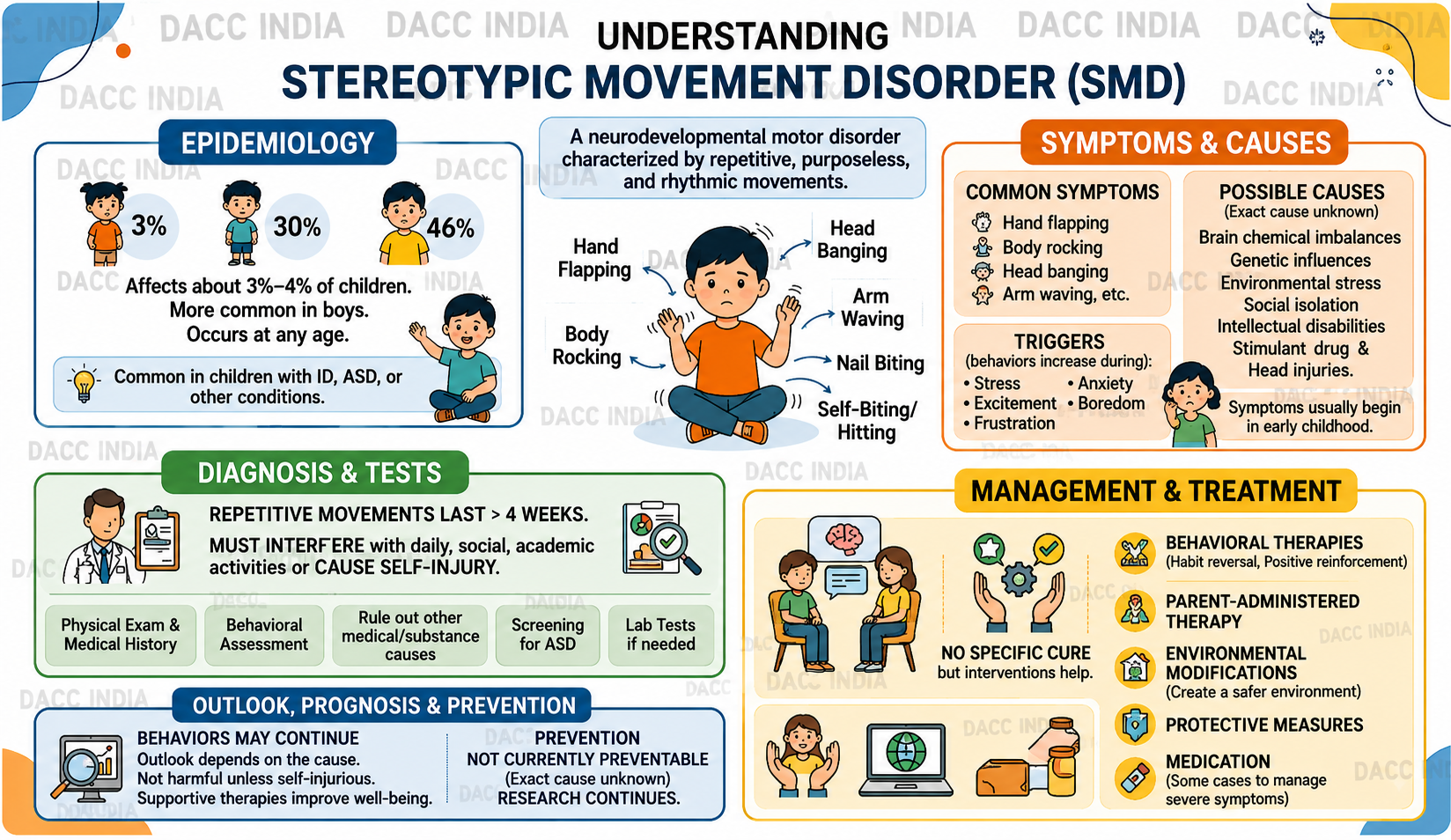
Stereotypic Movement Disorder (SMD) is a neurodevelopmental motor disorder characterized by repetitive, purposeless, and rhythmic movements such as hand flapping, body rocking, head banging, arm waving, and self-biting. These behaviors usually begin in early childhood, often before school age, and may interfere with social, academic, and daily functioning. In some cases, the movements can cause self-injury and physical harm. While simple repetitive movements are common in young children and may disappear over time, persistent and severe behaviors may indicate SMD. The disorder is more common in individuals with intellectual disabilities, autism spectrum disorder, or other neurodevelopmental conditions. Stereotypic behaviors may increase during stress, boredom, excitement, or anxiety and can sometimes serve as a way to reduce emotional tension. Diagnosis is based on DSM-5 criteria after ruling out other neurological, medical, or substance-related causes. Treatment mainly includes behavioral therapy, environmental modifications, emotional support, and in some cases medication to manage severe symptoms and improve daily functioning.
Epidemiology
Stereotyped Movement Disorder (SMD) is a rare neurodevelopmental condition affecting about 3%–4% of children. It involves repetitive movements or behaviors, which may be primary in otherwise typically developing children or secondary when linked with conditions such as intellectual disability or Autism Spectrum Disorder (ASD). SMD is more common in boys and can occur at any age. Simple motor stereotypies are common in young children, while complex motor stereotypies are less common but occur more frequently in children with developmental disabilities.
Symptoms and Causes
- Stereotypic Movement Disorder (SMD) involves repetitive, purposeless movements or behaviors.
- Common symptoms include:
- Hand flapping
- Body rocking
- Head banging
- Finger or arm wiggling
- Nail biting
- Self-biting or self-hitting
- Mouthing objects
- These movements may interfere with daily activities, academics, and relationships.
- Symptoms often increase during:
- Stress
- Anxiety
- Excitement
- Boredom
- Frustration
- The behaviors usually begin in early childhood and are more common in boys.
- Movements may decrease with distraction or focused attention.
- The exact cause is unknown, but possible factors include:
- Brain chemical imbalances
- Genetic influences
- Environmental stress
- Social isolation
- Intellectual disabilities
- Stimulant drugs and head injuries may also contribute to stereotypic behaviors.
- SMD can occur alone or alongside conditions such as Autism Spectrum Disorder (ASD).
- Treatment may involve:
- Behavioral modification
- Protective measures
- Monitoring in severe cases.
Diagnosis & Tests
- Stereotypic Movement Disorder (SMD) is diagnosed when repetitive movements last for at least four weeks.
- The movements must interfere with social, academic, or daily activities, or cause self-injury.
- There should be no other medical explanation for the behaviors.
- Diagnosis usually includes:
- Physical examination
- Review of medical history
- Assessment of symptoms and behaviors
- Doctors may ask about:
- When the movements started
- How often they occur
- Situations or triggers related to the behaviors
- Their impact on daily functioning
- Screening and assessments may be done to rule out conditions such as Autism Spectrum Disorder (ASD).
- Laboratory tests, including blood tests, may be recommended to check for physical causes.
- Severe self-injurious behaviors require careful medical evaluation, especially in young children.
Management & Treatment
Stereotypic Movement Disorder (SMD) has no specific cure, but behavioral therapies are considered the most effective treatment. Techniques such as habit reversal training, positive reinforcement, psychotherapy, and parent-administered behavioral therapy can help reduce repetitive movements and self-injurious behaviors. Creating a safer environment and using protective measures may also be necessary for children who harm themselves. Medications, including antidepressants, may sometimes help manage symptoms, but no medicine has been proven consistently effective for primary SMD. Early identification and intervention improve outcomes. Stereotypic behaviors may occur frequently, lasting from seconds to several minutes, and are often triggered by excitement, stress, fatigue, or boredom.
Outlook/ Prognosis
Stereotypic Movement Disorder (SMD) behaviors may continue through adolescence and adulthood, but they are usually not harmful unless they cause self-injury. Children can benefit from support from healthcare providers or occupational therapists to manage their movements and improve well-being. Parents are encouraged to ask healthcare providers about the causes of the disorder, possible related conditions, treatment options, and specialist support.
The outlook for SMD depends on its cause. Movements caused by medications or stimulants may reduce once the drug is stopped, while movements linked to head injuries may become permanent. In most cases, stereotypic movements do not develop into other neurological disorders such as seizures.
Prevention
Stereotypic Movement Disorder (SMD) cannot currently be prevented because its exact cause is still unknown. Researchers continue to study the disorder to better understand its causes and possible prevention methods.
A note from DACC India
Stereotypic Movement Disorder (SMD) is a neurodevelopmental disorder characterised by repetitive, purposeless movements such as hand flapping, body rocking, head banging, and self-biting. These behaviours usually begin in early childhood and may interfere with social, academic, and daily functioning. SMD is more common in boys and individuals with autism spectrum disorder or intellectual disabilities. Symptoms may increase during stress, anxiety, boredom, or excitement. Although the exact cause is unknown, treatment mainly involves behavioural therapy, environmental support, and protective measures. Early diagnosis and intervention can help improve functioning and reduce self-injurious behaviours.
Refrence links
- https://courses.lumenlearning.com/wm-abnormalpsych/chapter/motor-disorders/
- https://www.psychiatry.org/patients-families/neurodevelopment-disorders/neurodevelopmental-disorders-motor-disorders
- https://my.clevelandclinic.org/health/diseases/stereotypic-movement-disorder
- https://medlineplus.gov/ency/article/001548.htm
- https://pubmed.ncbi.nlm.nih.gov/21496612/
- https://www.psychologytoday.com/us/conditions/stereotypic-movement-disorder
Case Study
Aarav, a 7-year-old boy studying in Grade 2, was referred for psychological evaluation due to repetitive movements such as hand flapping, body rocking, head banging, and nail biting. These behaviours began around the age of three and became more frequent during stress, excitement, frustration, or boredom. His parents and teachers observed that the movements interfered with his classroom learning, social interactions, and daily activities. Occasionally, Aarav’s head banging caused mild self-injury. Developmental assessment showed slight delays in speech and social communication, although no major neurological illness or physical injury was reported. A detailed psychological evaluation, including behavioural observation, developmental history, and screening for Autism Spectrum Disorder (ASD), was conducted. The repetitive behaviours persisted for several months and could not be explained by another medical condition, leading to a diagnosis of Stereotypic Movement Disorder (SMD) based on DSM-5 criteria. Treatment focused mainly on behavioural therapy, habit reversal training, parent counseling, and classroom behaviour management. Occupational therapy and environmental modifications were also introduced to reduce stress and improve emotional regulation. After six months of intervention, Aarav showed significant improvement, with reduced repetitive behaviours and better participation in school and social activities. This case highlights the importance of early diagnosis, supportive care, and behavioural interventions in managing SMD effectively.
Infographic