Developmental Coordination Disorder
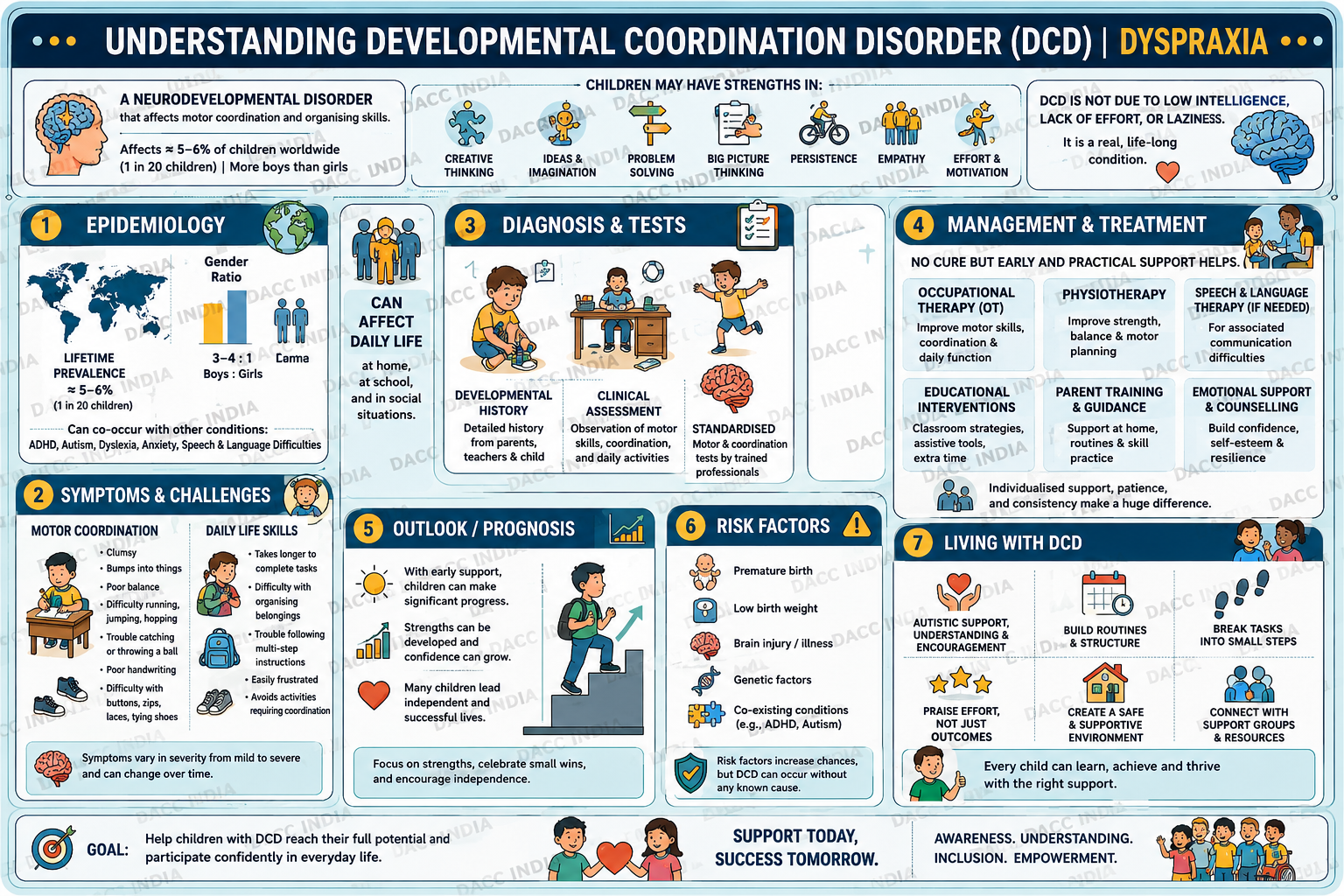
Developmental Coordination Disorder (DCD), also known as dyspraxia, is a neurodevelopmental disorder that affects a child’s ability to perform coordinated motor movements and daily activities. Children with DCD often show clumsiness, slow or inaccurate movements, poor balance, and difficulty with tasks such as handwriting, riding a bicycle, dressing, or playing sports. The disorder begins in early childhood and is diagnosed only when the motor difficulties are not caused by another medical or neurological condition. According to DSM-5, motor coordination problems significantly interfere with academic, social, and daily functioning despite normal intelligence. DCD affects approximately 5–6% of school-aged children and may continue into adolescence and adulthood. The causes are linked to difficulties in brain areas responsible for movement coordination and motor planning. Treatment mainly includes occupational therapy, physical therapy, classroom accommodations, and assistive technologies to improve coordination, balance, and independence. Early diagnosis and intervention are important for better outcomes and improved quality of life.
Epidemiology
Developmental Coordination Disorder (DCD), also called dyspraxia, is a lifelong neurological condition that affects motor coordination and movement skills. It is more common in males than females, with an estimated ratio of four males for every female affected. Around 5–6% of school-aged children experience this disorder. DCD can be difficult to diagnose because there are no specific laboratory tests, and diagnosis is usually made after ruling out other medical or neurological conditions. Children with DCD often struggle with coordination, balance, and daily activities that require motor skills.
Symptoms and Causes
- Developmental Coordination Disorder (DCD), also known as dyspraxia, is a lifelong neurological condition affecting motor coordination.
- It is more common in males than females, with a ratio of about 4:1.
- Approximately 5–6% of school-aged children are affected by DCD.
- The disorder affects movement skills, balance, and coordination.
- Children with DCD may struggle with daily activities requiring motor skills.
- Diagnosis is difficult because there are no specific laboratory tests for DCD.
- The condition is diagnosed after ruling out other medical or neurological disorders.
Diagnosis & Tests
- Dyspraxia or Developmental Coordination Disorder (DCD) is diagnosed by a team of professionals such as pediatricians, occupational therapists, psychologists, and neurologists.
- There are no specific medical tests to confirm DCD.
- Diagnosis is based on medical history, developmental assessment, interviews, questionnaires, and motor skill testing.
- Children with DCD show motor skills significantly below the expected level for their age.
- The coordination difficulties affect daily activities, school performance, and social functioning.
- Symptoms usually begin in early childhood and are often diagnosed after age 5 or 6 years.
- Other neurological or medical conditions, such as cerebral palsy or muscular dystrophy, must be ruled out before diagnosis.
- Tools like the DCDQ questionnaire and Movement Assessment Battery for Children (MABC-2) help assess motor coordination and identify DCD.
Management & Treatment
- There is no complete cure for dyspraxia or Developmental Coordination Disorder (DCD), but therapy can help manage symptoms.
- Occupational therapy and physical therapy improve motor skills, coordination, balance, and confidence.
- Treatment plans are individualized according to the child’s specific difficulties and needs.
- Task-oriented interventions help children practice difficult activities by breaking tasks into smaller, manageable steps.
- Adaptive strategies, such as using laptops, special grips, diaries, and calendars, can make daily tasks easier.
- Evidence-based interventions include Motor Skill Training (MST), Neuromotor Task Training (NTT), Cognitive Orientation to Occupational Performance (CO-OP), and Motor Imagery (MI).
- Training programs may also focus on core stability, strength, cardiorespiratory fitness, and functional movement skills.
- Educational and environmental modifications support academic success and improve both fine and gross motor skills.
Outlook/ Prognosis
- Children with dyspraxia (Developmental Coordination Disorder) may experience difficulties differently, as symptoms vary from child to child.
- Dyspraxia often occurs along with other conditions such as ADHD, language difficulties, dysgraphia, anxiety, depression, and autism spectrum disorder.
- Proper diagnosis and treatment of co-occurring conditions are important for overall development and well-being.
- Awareness of DCD has increased in many countries, leading to greater demand for effective support services and interventions.
- Collaboration among healthcare professionals, educators, psychologists, and families is essential for effective management.
- Early assessment and intervention help children receive support before difficulties become severe.
- Parent training, educational support, and consistent therapy approaches can improve coordination, learning, and daily functioning.
- Research continues to focus on improving evidence-based treatments and management strategies for children with DCD.
Living With
- Parents can support a child with dyspraxia by understanding their challenges and encouraging them emotionally at home and school.
- Being an advocate for the child helps ensure they receive proper care, educational support, and understanding from others.
- Children who qualify for special education may benefit from an Individualized Education Program (IEP) to support learning and daily functioning.
- Ongoing support may be needed throughout life to help improve motor skills and coordination.
- Parents should consult healthcare providers or occupational therapists if the child struggles with new movement-related tasks such as writing, driving, or other daily activities.
- Early guidance and therapy can help children develop strategies to overcome coordination difficulties and improve independence.
A note from DACC India
Developmental Coordination Disorder (DCD), also known as dyspraxia, is a neurodevelopmental disorder that affects motor coordination, balance, and daily functioning. Children with DCD often experience clumsiness, poor handwriting, slow movements, and difficulty performing tasks such as dressing, riding a bicycle, or playing sports. The disorder affects about 5–6% of school-aged children and is more common in boys. Diagnosis involves developmental assessments and motor skill testing after ruling out other neurological conditions. Although there is no complete cure, therapies such as occupational and physical therapy, educational support, and adaptive strategies help improve coordination, independence, and overall quality of life.
Refrence links
- https://courses.lumenlearning.com/wm-abnormalpsych/chapter/motor-disorders/
- https://www.psychiatry.org/patients-families/neurodevelopment-disorders/neurodevelopmental-disorders-motor-disorders
- https://pubmed.ncbi.nlm.nih.gov/32977886/
- https://my.clevelandclinic.org/health/diseases/23963-dyspraxia-developmental-coordination-disorder-dcd
- https://pmc.ncbi.nlm.nih.gov/articles/PMC1847727/
- https://www.physio-pedia.com/Developmental_Coordination_Disorder_(DCD)
Case Study
Aarav Mehta, a 9-year-old boy studying in the 4th standard, was brought to a child psychology clinic due to difficulties with coordination, balance, and motor activities. His parents and teachers noticed that he struggled with handwriting, tying shoelaces, riding a bicycle, and participating in sports. He frequently dropped objects and performed classroom tasks slowly compared to other children. Although Aarav had normal intelligence and good communication skills, he became frustrated and avoided activities that required motor coordination. These difficulties affected his academic performance, confidence, and social interaction. A detailed assessment was conducted by a pediatrician, psychologist, and occupational therapist using developmental history, interviews, and motor skill evaluations. The results showed motor coordination significantly below the expected level for his age, while other neurological conditions were ruled out. Based on DSM-5 criteria, Aarav was diagnosed with Developmental Coordination Disorder (DCD). Treatment included occupational therapy, physical therapy, task-oriented training, and classroom accommodations such as extra writing time and assistive tools. With continued therapy and family support, Aarav gradually improved in coordination, handwriting, and self-confidence.
Infographic