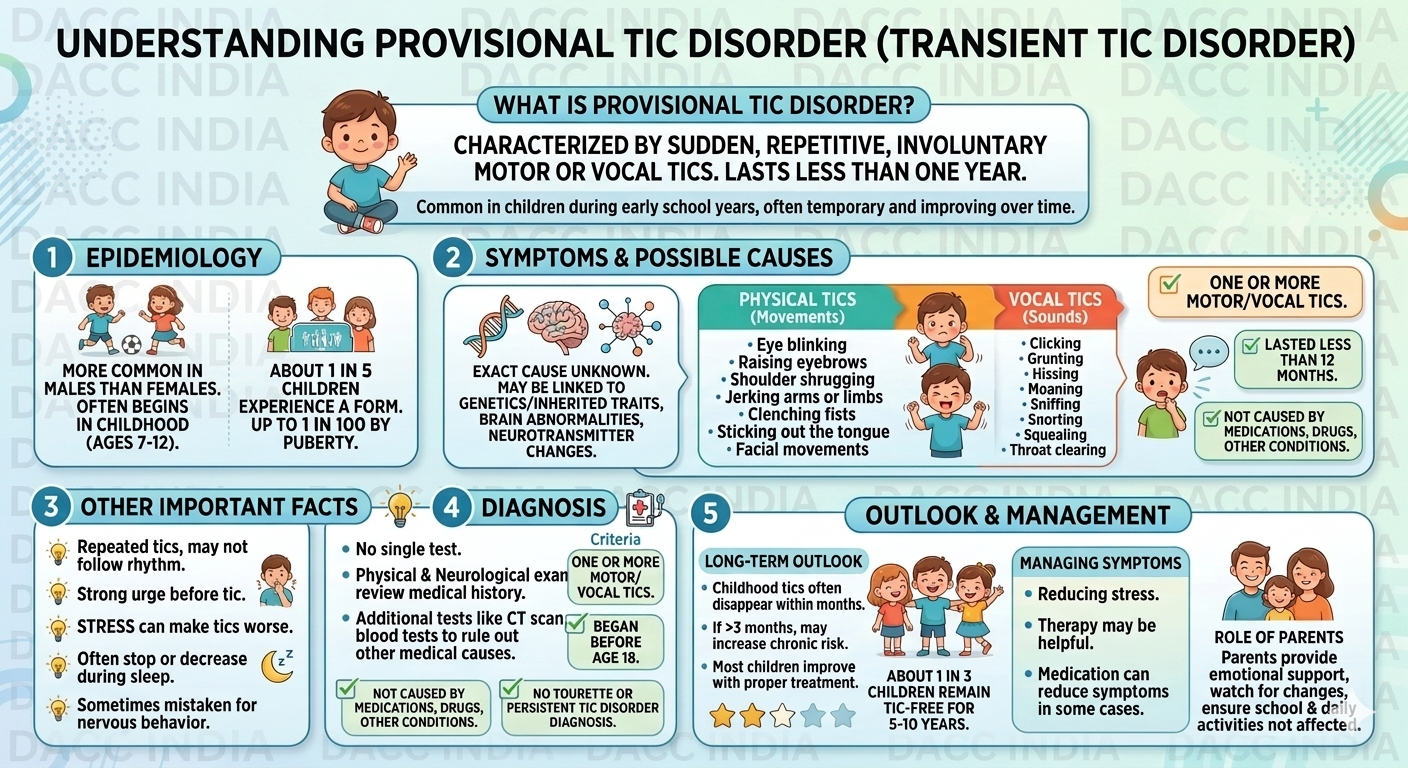
Provisional Tic Disorder
Provisional tic disorder, also known as transient tic disorder, is a condition characterized by sudden, repetitive, and involuntary motor or vocal tics that last for less than one year. Common motor tics include blinking and shoulder shrugging, while vocal tics may involve humming, throat clearing, or shouting words or phrases. For diagnosis, symptoms must begin before the age of 18 and should not be caused by medications, drugs, or another medical condition. Individuals with this disorder should not have a prior diagnosis of Tourette syndrome or persistent tic disorder. Provisional tic disorder is the most common type of tic disorder and frequently occurs in children during their early school years. Symptoms vary from person to person and are usually temporary, often improving over time.
Epidemiology
Tic disorders are more common in males than females and often begin in childhood, especially between ages 7 and 12. About 1 in 5 children experience some form of tic disorder, and up to 1 in 100 people may have a tic disorder before the end of puberty.
Symptoms and Causes
- Exact cause is unknown.
⦁ May be linked to:
⦁ Genetics / inherited traits
⦁ Brain abnormalities
⦁ Changes in neurotransmitters (brain chemicals)
⦁ Symptoms - Physical tics (movements)
⦁ Eye blinking
⦁ Raising eyebrows
⦁ Shoulder shrugging
⦁ Jerking arms or limbs
⦁ Clenching fists
⦁ Sticking out the tongue
⦁ Facial movements - Vocal tics (sounds)
⦁ Clicking
⦁ Grunting
⦁ Hissing
⦁ Moaning
⦁ Sniffing
⦁ Snorting
⦁ Squealing
⦁ Throat clearing - Other Important Facts
⦁ Tics often happen repeatedly and may not follow a rhythm.
⦁ People may feel a strong urge before the tic happens.
⦁ Stress can make tics worse.
⦁ Tics usually become less frequent during sleep or may stop while sleeping.
⦁ Tics can sometimes be mistaken for nervous behavior.
Diagnosis and Treatment
- How Transient Tic Disorder Is Diagnosed
- There is no single test to diagnose transient tic disorder.
- Diagnosis can be difficult because tics may be linked to other conditions.
- A physical exam (especially a neurological exam)
- Review of medical history
- Sometimes additional tests such as:
⦁ CT scan of the brain
⦁ Blood tests - These tests help rule out other medical causes of the symptoms.
- A person may be diagnosed with transient tic disorder if:
They have one or more motor or vocal tics - Motor tics: blinking, shrugging shoulders
- Vocal tics: humming, throat clearing, yelling words or phrases
- Tics have lasted less than 12 months.
- Tics began before age 18.
- Symptoms are not caused by medication, drugs, or another medical condition.
- The person does not have Tourette syndrome or another chronic tic disorder.
Outlook/ Prognosis
- Long-Term Outlook of Transient Tic Disorder
- Childhood tics often disappear within a few months.
- If tics last longer than 3 months, they may be more likely to become chronic.
- The condition can be managed with proper treatment.
- Reducing stress can help lessen symptoms.
- Therapy may be helpful.
- Medication can reduce symptoms in some cases.
- Most children improve over time and have a favorable outlook.
- Tics commonly go away, but some children may continue to experience them.
- About 1 in 3 children may remain completely tic-free over the next 5–10 years.
- Parents play an important role by:
⦁ Giving emotional support
⦁ Watching for changes in symptoms
⦁ Helping ensure the child’s school and daily activities are not affected
A note from DACC India
Provisional tic disorder, also called transient tic disorder, is a common childhood condition marked by sudden, repetitive motor or vocal tics lasting less than one year. It usually begins before age 18, most often between ages 7 and 12, and is more common in boys. Common symptoms include blinking, shoulder shrugging, throat clearing, and sniffing. The exact cause is unknown but may involve genetics, brain changes, and neurotransmitters. Diagnosis is based on symptoms and medical evaluation. Most children improve over time, and stress management, therapy, or medication may help reduce symptoms.
Refrence links
Case Study
Adam is a 9-year-old boy who was brought to a pediatric clinic by his parents because of repeated eye blinking, shoulder shrugging, and throat clearing that had been present for about four months. The symptoms began gradually during the school term and became more noticeable during stressful situations such as exams, classroom presentations, or when he was tired. His parents reported that the tics decreased during sleep and were absent at times when he was calm or deeply focused. Adam described feeling a strong urge before the tic occurred, followed by temporary relief after the movement or sound. Although physically healthy with normal development and no history of neurological illness, the tics caused him embarrassment at school, and he became increasingly self-conscious around classmates. A psychological and medical evaluation, including behavioral observation, developmental history, and neurological examination, ruled out other medical causes. Based on the presence of both motor and vocal tics lasting less than one year with onset before age 18, Adam was diagnosed with Provisional (Transient) Tic Disorder. Psychoeducation, stress management, parental support, and monitoring at home and school were recommended. Since symptoms were mild and not significantly impairing daily functioning, medication was not required. Adam’s prognosis is favorable, with a strong likelihood that symptoms will improve or resolve over time.
Infographic