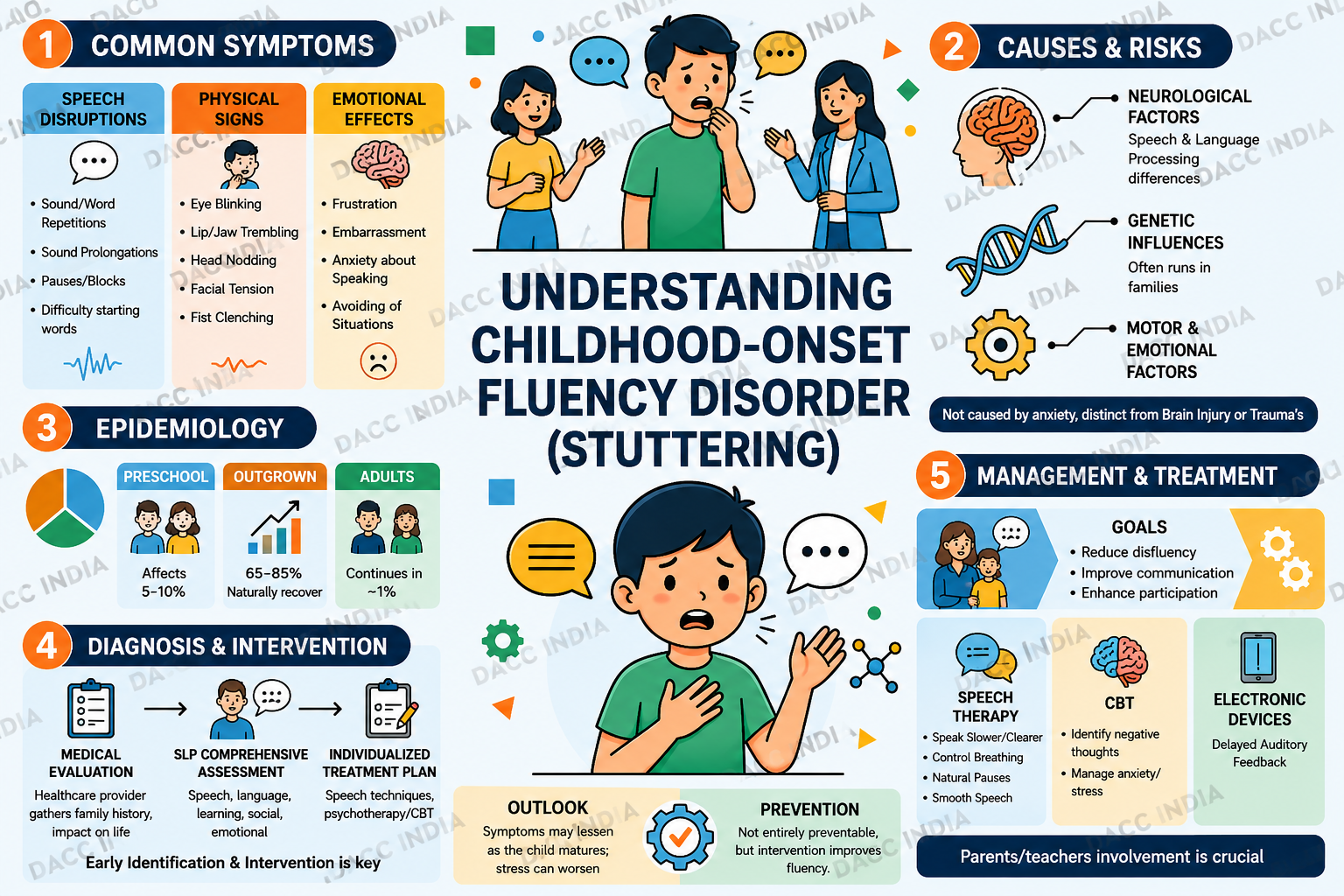
Childhood-Onset Fluency Disorder (Stuttering)
Childhood-onset fluency disorder, commonly known as stuttering or stammering, is a communication disorder that disrupts the normal flow, rhythm, and timing of speech. It is characterised by repetitions of sounds, syllables, or words, prolonged sounds, speech blocks, hesitations, and pauses that are inappropriate for a child’s age. Some children may also show physical tension in the face, neck, or shoulders while speaking.
Stuttering typically begins between the ages of 2 and 7 years, with most cases appearing before age 6. While mild speech disfluencies are common during early language development and often resolve naturally, persistent stuttering can cause anxiety, reduced self-confidence, and difficulties in social, academic, or occupational functioning. The condition is believed to be linked to neurological differences in speech and language processing rather than reactions from the child or others. Early identification and intervention, including speech therapy and psychological support, can help improve communication and reduce its impact on daily life.
Epidemiology
Childhood-onset fluency disorder (stuttering) is relatively common, affecting approximately 5–10% of preschool-aged children. However, many children naturally overcome the condition as they grow older, and only about 1% of adults continue to experience persistent stuttering.
Symptoms and Causes
- Repetition of sounds, syllables, or words.
- Prolongation of consonant or vowel sounds.
- Pauses or blocks within words or sentences.
- Difficulty starting words, phrases, or sentences.
- Use of filler words (e.g., “um”) to avoid speech difficulties.
- Word substitutions to avoid problematic words.
- Eye blinking.
- Lip or jaw trembling.
- Head nodding or jerking.
- Facial tension or unusual facial movements.
- Fist clenching and other signs of physical strain.
- Frustration or embarrassment about speaking.
- Anxiety related to communication.
- Avoidance of speaking situations.
- Vary depending on the situation.
- Worsen during stress, excitement, fatigue, or pressure.
- Be less noticeable during singing, reading aloud, or speaking in unison with others.
- Neurological factors.
- Speech and language processing differences.
- Motor and emotional factors.
- Genetic influences, as stuttering often runs in families.
- It is distinct from other conditions such as:
- Brain injury or stroke-related speech problems.
- Tourette’s disorder and vocal tics.
- Lasts longer than six months.
- Increases with age.
- Occurs with other speech or language difficulties.
- Causes physical struggle during speech.
- Interferes with social, academic, or work functioning.
- Leads to significant anxiety or emotional distress.
- Begins during adulthood.
Diagnosis and Tests
Fluency disorders are typically diagnosed based on a person’s signs, symptoms, and speech patterns.
- Family history of speech disorders.
- The impact of speech difficulties on daily life.
- Specific communication challenges and goals.
- Personal experiences related to the speech problem.
- Individuals are often referred to a speech-language pathologist (SLP) for a comprehensive assessment.
- SLPs specialize in speech, language, and communication disorders and can distinguish fluency disorders from other speech conditions.
- Based on the evaluation, the SLP develops an individualized treatment plan.
- Learning difficulties.
- Social interaction challenges.
- Emotional or mental health concerns, such as anxiety.
Management & Treatment
Diagnosis is made by a trained healthcare professional, usually a speech-language pathologist (SLP).
- Reduce or eliminate fluency difficulties.
- Improve communication skills.
- Enhance participation in school, work, and social settings.
- Speak more slowly and clearly.
- Control breathing during speech.
- Use natural pauses while speaking.
- Improve speech fluency and smoothness.
- Reduce associated behaviors such as blinking or coughing.
- Develop effective communication strategies.
- Use shorter and clearer sentences when needed.
- Electronic devices, such as delayed auditory feedback tools, may help improve fluency by encouraging slower speech.
- Cognitive-Behavioural Therapy (CBT) , can help:
- Identify negative thought patterns related to stuttering.
- Manage anxiety, stress, and emotional distress associated with speaking.
- For children, improving communication between parents and the child can support treatment and help the child cope more effectively.
- Recovery is common:
- Approximately 65–85% of children outgrow childhood stuttering.
- The severity of symptoms by age 8 is an important predictor of whether stuttering will persist into adolescence or adulthood.
- Not all individuals who stutter seek treatment:
- Some view stuttering as a difference rather than a disorder.
- They may focus on self-acceptance, confidence, and supportive communities rather than changing their speech.
Outlook/ Prognosis
- Fluency disorders affect individuals differently, with symptoms ranging from mild to severe.
- Speech therapy can help improve communication skills and manage speech difficulties such as stuttering and cluttering.
- Symptoms may reappear or worsen during periods of stress.
- Regular practice of techniques and strategies learned in speech therapy can help maintain speech fluency and manage symptoms effectively.
Prevention
- Fluency disorders cannot currently be prevented because their exact causes are not fully understood.
- However, appropriate treatment and speech therapy can help improve speech fluency and reduce communication difficulties.
Living With
- Consult a healthcare provider if speech difficulties affect confidence, communication, or daily activities.
- Parents who are concerned about their child’s speech development should speak with a pediatrician.
- A pediatrician can assess whether speech development is age-appropriate and may refer the child to a speech-language pathologist (SLP) for further evaluation and treatment.
- Important questions to discuss with a healthcare provider include:
⦁ The specific type of fluency disorder present.
⦁ Factors or triggers that may worsen symptoms.
⦁ Recommended treatment options.
⦁ What to expect during speech therapy sessions.
⦁ Available resources, support services, or support groups.
A note from DACC India
Childhood-onset fluency disorder, or stuttering, disrupts the normal rhythm of speech through repetitions, prolongations, or blocks. Typically emerging between ages 2 and 7, it is often linked to neurological and genetic factors. While many children outgrow it, persistent cases can impact confidence and social functioning. Symptoms vary with stress and can include physical tension or emotional distress. Diagnosis and treatment, primarily through speech-language pathologists, aim to improve fluency and communication strategies. Although not preventable, early intervention, speech therapy, and CBT help manage the disorder, significantly reducing its impact on daily life.
Refrence links
- https://www.cincinnatichildrens.org/health/c/communication-disorders
- https://www.medicalnewstoday.com/articles/communication-disorders#causes
- https://www.verywellmind.com/communication-disorder-types-5220602
- https://ayjnishd.nic.in/speech-language-disorders-intervnetion/
- https://www.psychologytoday.com/us/conditions/childhood-onset-fluency-disorder
- https://www.mayoclinic.org/diseases-conditions/stuttering/symptoms-causes/syc-20353572
- https://my.clevelandclinic.org/health/diseases/23480-fluency-disorder
Case Study
07-year-old Leo presents with childhood-onset fluency disorder, characterized by frequent sound repetitions, prolonged syllables, and noticeable speech blocks. While his stuttering began at age four, recent months have seen a significant escalation, accompanied by physical tension such as eye blinking and facial strain. Leo has increasingly begun to avoid classroom participation and expresses visible embarrassment, indicating that the condition is now negatively impacting his self-confidence and academic functioning. A comprehensive assessment by a speech-language pathologist confirmed the diagnosis, noting likely genetic and neurological predispositions. To address these challenges, a multi-modal treatment plan has been implemented. This includes structured speech therapy to develop techniques like controlled breathing and slowed speech, alongside Cognitive-Behavioural Therapy (CBT) to manage communication-related anxiety. Additionally, the clinical team is collaborating with Leo’s parents and teachers to foster a supportive, low-pressure environment. By combining these specialized interventions with emotional support, the primary goals are to improve Leo’s speech fluency, reduce his avoidance behaviors, and bolster his self-esteem. The prognosis is favorable, as early professional intervention is a critical factor in helping children effectively manage speech difficulties and thrive in social and academic settings.
Infographic