Tic Disorder
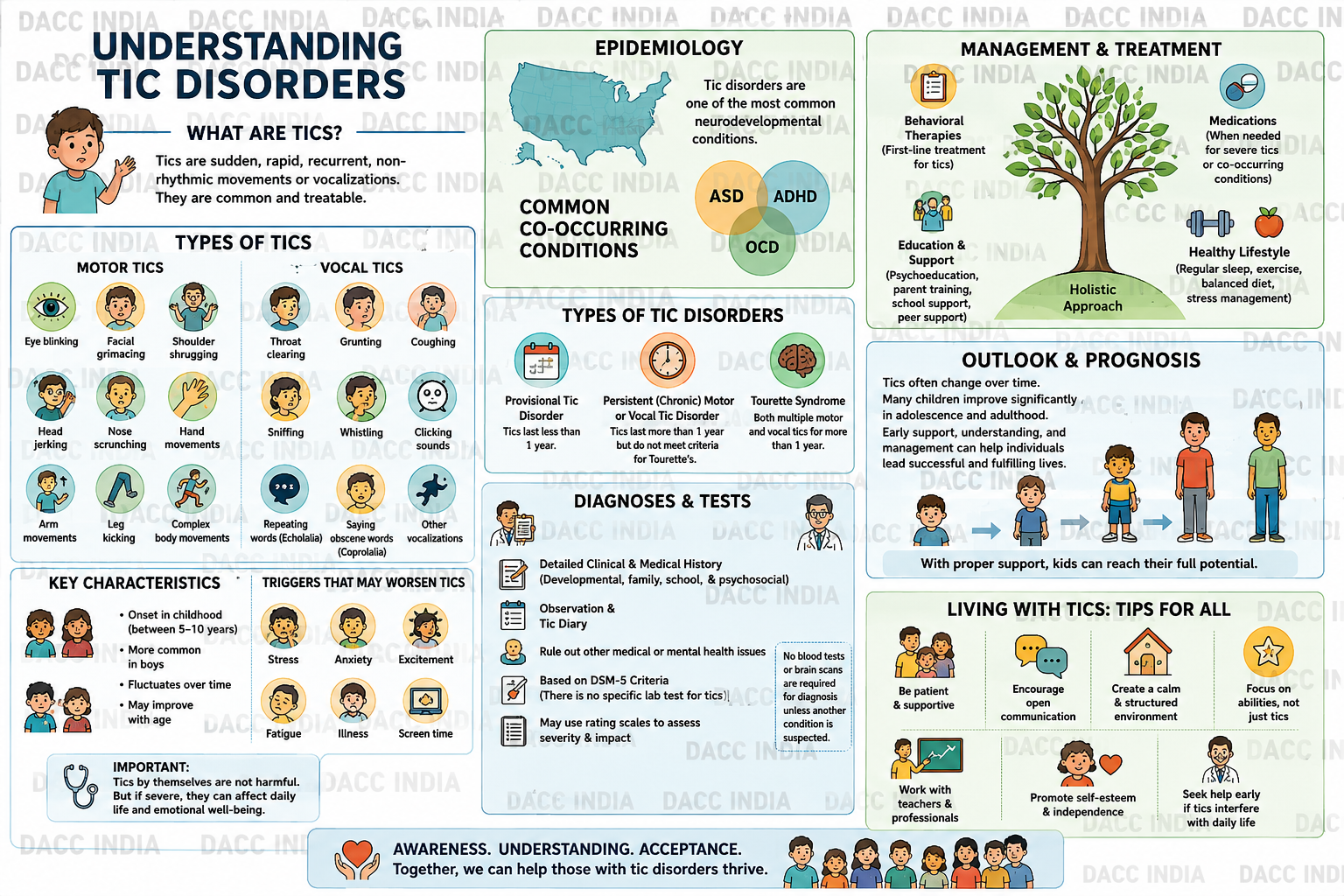
Tic disorders are neurological conditions characterized by sudden, rapid, repetitive, and involuntary motor movements or vocalizations. Common motor tics include eye blinking, facial grimacing, shoulder shrugging, head jerking, and jumping, while vocal tics may involve throat clearing, sniffing, barking, grunting, or repeating words. Tic disorders usually begin in childhood, often between ages 5 and 10, and are more common in boys. Types of tic disorders include provisional tic disorder, persistent (chronic) motor or vocal tic disorder, and Tourette syndrome, which involves both motor and vocal tics lasting for more than one year.
Tics may worsen during stress, anxiety, excitement, fatigue, or boredom and often decrease during calm or focused activities. Although the exact cause is unknown, genetic and neurological factors are believed to contribute. Many children experience mild tics that improve over time, but severe cases may interfere with social, academic, or emotional functioning. Diagnosis is based on the type, duration, and frequency of symptoms after ruling out medical or substance-related causes. Treatment may include behavioral therapy, habit reversal training, emotional support, and medication in severe cases.
Epidemiology
Tic disorders are fairly common. Researchers estimate that 1 out of every 50 children has Tourette syndrome or another tic disorder.
Symptoms and Causes
Tic disorders are neurological conditions involving sudden, repetitive, involuntary movements or sounds called tics.
- Types of tics include:
- Motor tics: blinking, head jerking, shoulder shrugging, facial grimacing, touching objects
- Vocal tics: coughing, throat clearing, grunting, repeating words or phrases
- Tics may be:
- Simple tics: involve few muscle groups (eye blinking, nose twitching)
- Complex tics: involve coordinated movements or repeated phrases
- Tics are often preceded by an uncomfortable urge or tension that is relieved after performing the tic.
- Symptoms usually begin in childhood, especially between ages 5 and 10.
- Tic disorders are more common in boys than girls.
- Symptoms may worsen due to:
- Stress
- Anxiety
- Excitement
- Fatigue
- Illness
- Extreme temperatures
- Possible causes and risk factors include:
- Genetic influences
- Brain chemical imbalances involving dopamine and serotonin
- Family history of tic disorders
- Tic disorders may occur along with:
- ADHD
- Anxiety disorders
- Obsessive-Compulsive Disorder (OCD)
- Diagnosis is based on the type, duration, and frequency of tics after ruling out medical causes.
- Many children improve over time, but severe cases may require:
- Behavioral therapy
- Emotional support
- Medication.
Diagnosis & Tests
Tic disorders are diagnosed through evaluation of a child’s signs, symptoms, and medical history. Doctors may perform a physical examination and sometimes ask for videos of the child’s tics to better understand the behaviours. Diagnosis depends on the type and duration of tics, and symptoms must begin before age 18 and not be caused by drugs or other medical conditions.
Transient tic disorder is diagnosed when one or more tics last for less than 12 months, while chronic motor or vocal tic disorder involves tics occurring almost daily for more than a year. Tourette Syndrome (TS) is diagnosed when both motor and vocal tics are present for at least 12 months. Doctors may also evaluate related conditions such as ADHD and OCD and may recommend blood tests or MRI scans to rule out other causes.
Management & Treatment
Treatment for tic disorders depends on the type and severity of symptoms. Mild tics often improve on their own and may not require treatment. Managing stress, fatigue, and anxiety can help reduce tic symptoms. For severe tics that interfere with daily life, doctors may recommend behavioural therapy, medication, or other medical treatments.
Behavioural therapies such as Habit Reversal Training (HRT) and Comprehensive Behavioural Intervention for Tics (CBIT) help children recognize urges and replace tics with healthier behaviours. Relaxation techniques, family support, and educational guidance are also important. In rare severe cases, treatments such as deep brain stimulation may be considered.
Outlook/ Prognosis
Tics usually improve over time and may eventually stop completely. Some tics last only a few months, while others may come and go for several years. Most severe tics begin between ages 6 and 17 and often improve or disappear after puberty.
Prevention
Tics are repetitive, involuntary movements or sounds that usually begin in childhood. They may be motor tics, such as blinking or shoulder shrugging, or vocal tics, such as throat clearing or grunting. Tic disorders are more common in boys and may worsen with stress, anxiety, fatigue, or excitement. The exact cause is unknown, but genetic and neurological factors are believed to contribute. Diagnosis is based on the type, frequency, and duration of tics. Most mild tics improve over time, while severe cases may require behavioral therapy, medication, and supportive care.
Living With
Parents can help children with tics through simple self-care strategies.
- Helpful tips include:
- Reducing stress and anxiety through enjoyable activities
- Ensuring proper sleep and rest
- Avoiding drawing too much attention to the tics
- Not scolding or blaming the child for the tics
- Reassuring the child and reducing embarrassment
- Informing teachers, family, and friends about the condition
- with the child’s school for support
- Medical help should be sought if tics:
- Become frequent or severe
- Cause pain or discomfort
- Interfere with school or daily activities
- Lead to emotional problems such as embarrassment or depression
- Occur with anger or self-harm
- Parents may ask healthcare providers about:
- The seriousness of the tics
- Whether the child has a tic disorder
- The type of tic disorder
- Recommended treatment options
- Whether the tics may improve or disappear over time.
A note from DACC India
Tic disorders are neurological conditions that cause sudden, repetitive, involuntary movements or sounds called tics. They commonly begin in childhood and may include blinking, shoulder shrugging, throat clearing, or repeating words. Symptoms often worsen with stress, anxiety, fatigue, or excitement and are more common in boys. While many mild tics improve over time without treatment, severe cases may interfere with daily life and require behavioral therapy, medication, and emotional support. Parents can help by reducing stress, reassuring the child, and seeking medical advice when symptoms become severe or disruptive.
Refrence links
- https://www.psychiatry.org/patients-families/neurodevelopment-disorders/neurodevelopmental-disorders-motor-disorders
- https://my.clevelandclinic.org/health/diseases/tics-and-tic-disorders
- https://www.medicalnewstoday.com/articles/317950
- https://www.aacap.org/AACAP/Families_and_Youth/Facts_for_Families/FFF-Guide/Tic-Disorders-035.aspx
- https://www.medicalnewstoday.com/articles/317950#Symptoms
Case Study
Rohan, a 10-year-old boy studying in Grade 5, was brought for psychological evaluation due to repetitive blinking, shoulder shrugging, and throat clearing that had continued for more than a year. The symptoms first appeared at the age of eight and became more noticeable during stress, anxiety, excitement, or fatigue. His teachers observed that the tics interfered with classroom concentration and social interactions, as classmates often teased him. Rohan reported feeling an uncomfortable urge before the tic and temporary relief afterward. A detailed psychological assessment, including behavioral observation, developmental history, and screening for conditions such as ADHD and anxiety, was conducted. Medical causes and substance-related conditions were ruled out through physical examination and consultation. Based on DSM-5 criteria, Rohan was diagnosed with Tourette Syndrome, a type of tic disorder involving both motor and vocal tics. Treatment focused on behavioral therapies such as Habit Reversal Training (HRT) and Comprehensive Behavioral Intervention for Tics (CBIT), along with relaxation techniques, parent counseling, and school support. After several months of intervention, the frequency and severity of the tics reduced significantly, and Rohan showed improvement in confidence, emotional regulation, classroom participation, and social interaction. This case highlights the importance of early diagnosis, behavioral intervention, and family support in managing tic disorders effectively.
Infographic