Motor Disorders
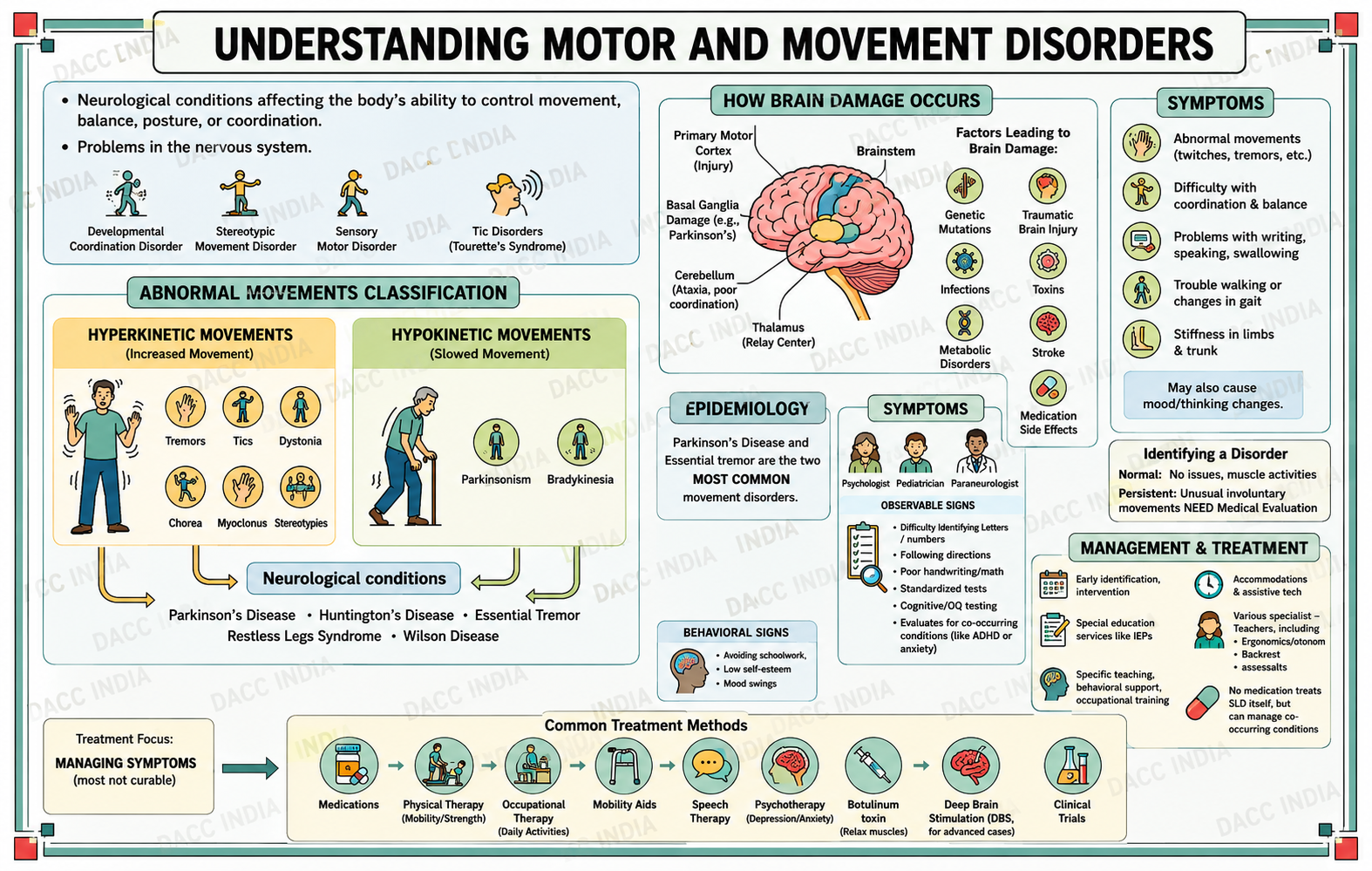
Motor and movement disorders are neurological conditions that affect the body’s ability to control movement properly. According to the DSM-5, motor disorders include developmental coordination disorder, stereotypic movement disorder, and tic disorders such as Tourette’s disorder, persistent motor or vocal tic disorder, and provisional tic disorder. These disorders occur due to problems in the nervous system and can cause either excessive involuntary movements or reduced and slowed movements. Normal movement depends on proper coordination between the brain, spinal cord, motor nerves, and skeletal muscles. Abnormal movements are mainly classified into hyperkinetic movements, which involve increased movements such as tremors, tics, dystonia, chorea, myoclonus, and stereotypies, and hypokinetic movements, which involve slowed movement such as parkinsonism and bradykinesia. Several neurological conditions are associated with movement disorders, including Parkinson’s disease, Huntington’s disease, Tourette syndrome, essential tremor, restless legs syndrome, and Wilson disease. These disorders may result from genetic causes, brain degeneration, injury, medications, or other medical conditions, and they can significantly affect coordination, balance, speech, posture, and daily functioning.
Epidemiology
The two most common movement disorders are Parkinson’s disease and essential tremor.
Symptoms and Causes
- Symptoms of Movement Disorders
- Abnormal or uncontrolled movements such as twitches, spasms, tremors, jerks, shaking, and twisting.
- Difficulty with coordination and balance.
- Problems performing tasks like writing, speaking, or swallowing.
- Trouble walking or changes in gait.
- Stiffness or rigidity in the limbs and trunk.
- Symptoms may affect the limbs, hands, fingers, feet, toes, facial muscles, head, neck, posture, and voice.
- Some movement disorders may also cause mood or thinking changes.
- Identifying a Movement Disorder
- Occasional movements like hiccups or muscle twitches are normal.
- Persistent or unusual involuntary movements may indicate a movement disorder and should be medically evaluated.
- Causes of Movement Disorders
- Caused by damage or malfunction in brain areas controlling movement.
- Key brain regions involved:
⦁ Primary motor cortex – initiates voluntary movement.
⦁ Basal ganglia – coordinates smooth movement and posture.
⦁ Cerebellum – controls balance and coordination.
⦁ Thalamus – relays motor and sensory information.
- Factors Leading to Brain Damage
- Genetic mutations and inherited conditions.
- Traumatic brain injury.
- Infections.
- Exposure to toxins.
- Metabolic disorders.
- Stroke and vascular diseases.
- Side effects of medications.
Management & Treatment
- Treatment of Movement Disorders
- Treatment depends on the type and severity of the movement disorder.
- Most movement disorders cannot be completely cured, so treatment mainly focuses on managing symptoms.
- Some disorders, such as medication-induced parkinsonism, can often be treated successfully.
- Common Treatment Methods
- Medications: Help reduce symptoms such as spasticity, dystonia, Parkinson’s disease symptoms, and restless legs syndrome.
- Physical therapy: Improves movement, flexibility, strength, and reduces pain or stiffness.
- Occupational therapy: Helps individuals perform daily activities safely and independently.
- Mobility aids: Devices like canes, walkers, and wheelchairs improve safety and independence.
- Speech therapy: Helps improve speech, language, and swallowing difficulties.
- Psychotherapy: Supports emotional and mental health issues such as depression and anxiety that may occur with movement disorders.
- Botulinum toxin (Botox) injections: Help relax muscles affected by dystonia or spasticity.
- Deep brain stimulation (DBS): A surgical treatment used mainly for advanced Parkinson’s disease, dystonia, and severe tremors to reduce involuntary movements.
- Clinical trials: Research studies testing new treatments and therapies for movement disorders.
A note from DACC India
Motor and movement disorders are neurological conditions that affect the body’s ability to control movement and coordination. These disorders may cause abnormal involuntary movements such as tremors, tics, spasms, or slowed movements like rigidity and bradykinesia. Common disorders include Parkinson’s disease, Tourette syndrome, and essential tremor. Causes may include genetic factors, brain injury, infections, or medication side effects. Symptoms can interfere with balance, speech, posture, and daily activities. Although many movement disorders cannot be completely cured, treatments such as medications, physical therapy, speech therapy, and deep brain stimulation help manage symptoms and improve quality of life.
Refrence links
Case Study
Rohan Sharma, a 16-year-old student, was brought to a psychological clinic by his parents due to repeated involuntary movements such as eye blinking, neck jerking, shoulder movements, and sudden vocal sounds that had been present for nearly three years. The symptoms began gradually during early adolescence and became more severe during stressful situations, especially at school. Rohan often felt embarrassed because classmates teased him, which reduced his self-confidence and increased his anxiety. He also experienced difficulty concentrating in class and completing written tasks. There was no history of serious physical illness or brain injury, but a family history of tic-related symptoms suggested a possible genetic factor. Clinical observation and psychological assessment showed normal intelligence but significant emotional distress related to the involuntary movements. Based on DSM-5 criteria, he was diagnosed with Tourette’s Disorder, a type of motor and movement disorder. Treatment included behavioral therapy, relaxation techniques, psychoeducation, and medication to reduce tic severity. Family counseling and occupational support were also provided. After several months of treatment, Rohan showed moderate improvement in symptom control, emotional stability, and social participation.
Infographic